
How to Manage Snooker Table Sessions, Timing and Bookings
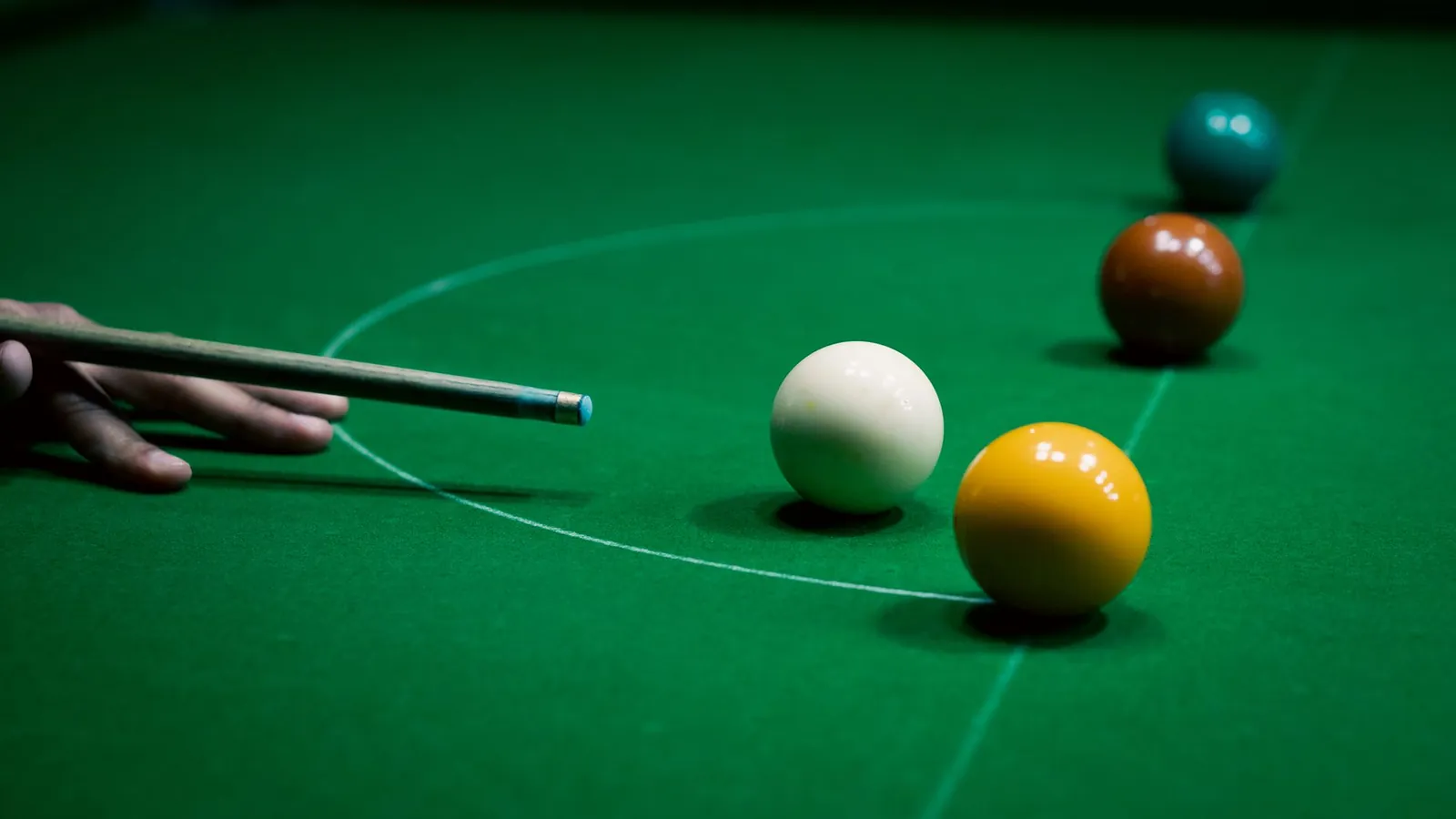
Snooker table session management means knowing every table's status, recording the exact start and end of each game, and applying one written set of rate rules to every bill. Done well, it prevents double bookings, unbilled minutes and arguments at the counter.
This guide is for owners and managers who already run a club and want tighter control of tables and time. If you are still deciding whether you need software at all, start with what snooker club management software is.
What is a snooker table session?
A snooker table session is one period of play on one table, from the moment the game starts to the moment the bill is paid and the table is free again. Each session should have a start time, an end time, a game type, a rate and a payment record.
Thinking in sessions, rather than in "customers", fixes a common gap: the table is the thing that earns money, so the table is what you track. A simple status model keeps every member of staff on the same page.
| Table status | What it means | What staff should do |
|---|---|---|
| Available | Clean, set up, nobody booked | Offer it to the next walk-in |
| In play | A session is running | Leave it alone; check the session if asked |
| Paused | Play stopped under the club's pause rule | Resume or end the session; do not reassign |
| Reserved | Held for a booking | Hold until the agreed time plus grace period |
| Maintenance | Cloth, cushion or lighting issue | Do not assign until cleared by the manager |
How do snooker clubs charge for table time?
Most snooker clubs charge in one of two ways: a fixed price per game or a time-based rate. Many use both, for example a fixed price for a standard game and a per-minute rate for longer practice sessions.
| Method | How it works | Works well for | Watch out for |
|---|---|---|---|
| Fixed price per game (single) | One agreed price per game | Quick casual games; simple counter work | Long games earn the same as short ones |
| Fixed price per game (doubles) | A separate fixed price for doubles | Groups of four | Make sure staff choose the right game type |
| Timed rate (per minute) | Rate × minutes played | Practice, long frames, regulars | Needs written rules for pauses, minimums and rounding |
| Timed rate in blocks | Rate per block, e.g. per 15 or 30 minutes | Coin meters and simple tariffs | Players pay for unused time at the end |
Whichever method you use, write it down and display it. Players accept a bill they can predict.
How to calculate a timed snooker bill
A timed bill is the billable minutes multiplied by the rate per minute, after the club's pause, rounding and minimum rules are applied. Agree the order of those rules once and apply it to every table.
The example below uses "rate units" so it works in any currency. The rates are illustrative, not DigiNizam prices.
- Record the start time. A timed session starts at 18:00.
- Record pauses. Play pauses from 18:40 to 18:50 by agreement. Under this club's rule, paused time is not billed.
- Record the end time. The session ends at 19:22. Elapsed time is 82 minutes; billable time is 82 − 10 = 72 minutes.
- Apply rounding. The club rounds up to the next 5 minutes, so 72 becomes 75 minutes.
- Apply the minimum. The club's minimum is 30 minutes. 75 is above it, so nothing changes.
- Multiply by the rate. At 2 rate units per minute, the bill is 75 × 2 = 150 rate units.
Now take a short session of 12 minutes on the same table. Rounding gives 15 minutes, but the 30-minute minimum applies, so the bill is 30 × 2 = 60 rate units.
Two rules cause most disputes: whether pauses are billed, and whether the minimum is applied before or after rounding. Decide both, display them and make sure your system applies them the same way every time.
How should pauses, table changes and disputes be handled?
A pause should stop the billable clock only when the club's written rule allows it, and the session should stay open so it is not billed twice. A table change should move the running session, not start a fresh one.
- Pauses. Decide who can pause a table, for how long, and whether paused time is charged. Record the pause in the session, not on a sticky note.
- Table changes. If players move from Table 3 to Table 5, the session should carry its start time with it.
- Disputes. Show the player the session record: start, pauses, end, rate and rules. A printed receipt ends most arguments quickly.
How do you handle reservations and walk-ins without double booking?
Keep one source of truth for table status and mark a table as reserved the moment a booking is accepted. Double booking happens when bookings live in a phone, a notebook and someone's memory at the same time.
- Set a hold time. Decide how long a reserved table waits before it is released, and tell the customer.
- Use a grace period. A short grace period avoids giving a regular's table away for a two-minute delay.
- Block for maintenance. Mark tables with cloth, cushion or lighting problems as under maintenance so no shift assigns them by mistake.
- Fill gaps deliberately. A walk-in can take a reserved table only if the session will end before the booking. Agree that rule with staff in advance.
How do you manage multiple tables at peak time?
At peak time, a manager needs one screen showing every table's status, running time and next booking. That view lets staff see which sessions are about to end and who is waiting.
Three habits help on busy nights:
- One person owns the table board during each shift, even if several people take payments.
- Handover happens on the system, not verbally. The incoming shift sees running sessions and reservations as they are.
- Rates and discounts are protected. Only roles with permission can change a rate or approve a discount, so busy counters do not improvise.
How can a snooker club reduce manual timing errors?
Start every session in one place, never backdate a start time without approval, and review short or edited sessions at the end of the day. Most timing losses come from small, repeated habits rather than one large mistake.
- Start the session when play starts, not when the customer pays.
- Use the same rate rules for every table of the same type.
- Require a reason for every discount and every manual change.
- Review the day's shortest sessions, edits and voids during closing.
- Compare session totals with the cash and credit recorded in the daily close.
How do you measure table usage?
Table utilisation is the share of available table time that was actually played: played hours divided by available hours (tables × opening hours). A club with 6 tables open 10 hours has 60 available table-hours a day; 33 played hours means 55% utilisation.
Utilisation by time of day shows when to run off-peak offers and when to schedule maintenance. A related measure, revenue per available table-hour, is explained in our guide to tracking snooker club sales, revenue and expenses.
How DigiNizam manages snooker table sessions
DigiNizam's snooker club software follows the session from table to receipt: choose the table and game type, start the session, run the game or timer, finish, apply any discount, record cash or credit, print the receipt and release the table.
- Game types: Single Game and Double Game at configured fixed rates, and a Century timer with per-minute pricing, start, pause, resume and stop, minimum duration and rounding.
- Rates: configurable per branch, and per table for Century tables.
- Tables: table types, live status, availability, reservations and maintenance.
- Sessions: customer linking, payment, closure and session history.
- Control: discounts with mandatory reasons and approval limits, user roles and module-level permissions, and notifications for issues such as large discounts or maintenance.
Reservations and bookings are recorded by club staff. Online customer self-booking with deposits is not currently available; it can be built as a custom feature for an additional charge. Confirm your game types, pause behaviour, minimum duration and rounding rules during a demo.
Frequently asked questions
Is per-minute billing better than hourly billing for snooker?
Per-minute billing is fairer for both sides, because players pay for the time they use. Hourly or block billing is simpler to explain. Many clubs combine per-minute timing with a minimum charge.
Should paused snooker time be charged?
It is the club's decision. Some clubs stop the clock for agreed breaks; others charge for the table while it is held. Write the rule down, display it and apply it to every table.
How long should a reserved snooker table be held?
Set a fixed hold time and a short grace period, tell customers when they book, and release the table when the time passes. Recording the reservation on the table's status prevents double booking.
Can different snooker tables have different rates?
Yes, if your system supports table-specific pricing. Clubs often charge more for match tables or premium rooms. In DigiNizam, Century rates can be set per table and other rates per branch.
Run your tables on one screen
Bring your table list, your current rates and your pause and minimum rules to a DigiNizam demo. The team will set up a sample evening so you can see sessions, timers, reservations and receipts working together. Pricing is agreed after the demo once your requirements are clear.
Book a demo