
How to Manage Restaurant Inventory and Reduce Food Waste
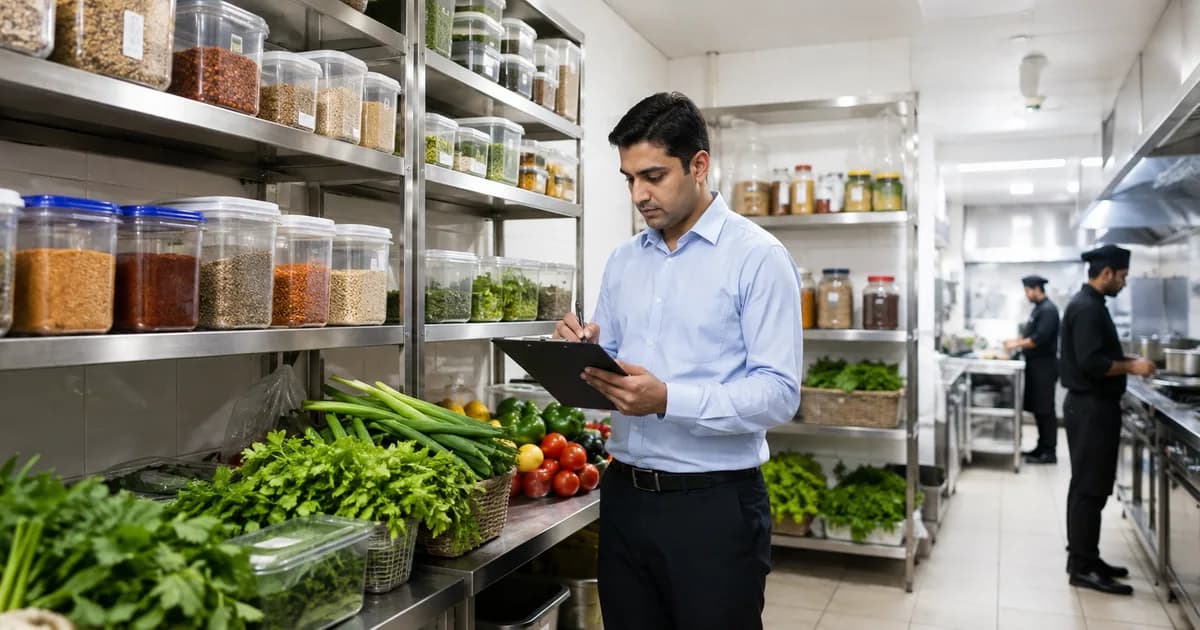
Restaurant inventory management is the process of counting, tracking, purchasing, storing and reviewing the ingredients and stock a restaurant uses. A practical inventory process can reduce preventable food waste by helping teams buy closer to demand, rotate stock correctly, notice expiry risk earlier and record where waste is happening.
A useful restaurant inventory workflow is simple: know what you have, understand how quickly it is used, purchase against real demand, store and rotate it properly, and review waste before the next order.
What Is Restaurant Inventory Management?
Restaurant inventory management is the process of controlling ingredients and other stock from receiving through storage, usage, transfer, sale or waste. It helps a restaurant understand what is on hand, what is being consumed, what needs attention and what should be reordered.
Restaurant inventory can include raw ingredients, prepared ingredients, beverages, packaging and other operational supplies. The exact setup depends on how the restaurant operates.
Why Is Restaurant Inventory Management Important?
Poor inventory visibility can create two opposite problems: a restaurant may order too little and run out of important ingredients, or it may order too much and increase the risk of excess stock, spoilage and waste.
Better inventory management can help teams understand current stock, identify fast- and slow-moving items, plan purchases closer to demand, review waste patterns and make more consistent reorder decisions. The goal is not simply to hold less inventory; it is to keep stock aligned with actual usage.
What Causes Inventory-Related Food Waste in Restaurants?
Several preventable causes of restaurant food waste are closely connected with inventory control. Common examples include over-ordering, inaccurate stock counts, poor stock rotation, missed expiry dates, incorrect storage and throwing items away without recording why they were wasted.
When managers cannot see what entered inventory, how it moved and why it left as waste, the same problems are more likely to repeat.
Over-Ordering
Buying more stock than the restaurant can use within a practical storage window increases the chance that excess ingredients will lose quality or expire before they are needed.
Inaccurate Stock Counts
If staff do not know what is already available, the restaurant may reorder items it still has, creating unnecessary excess inventory.
Poor Stock Rotation and Expiry Control
Older or earlier-expiring stock can be forgotten when shelves, labels or storage areas are not organized clearly. A consistent rotation method helps staff identify which stock should be used first.
No Waste Tracking
If spoiled, expired, damaged or over-prepared items are discarded without being recorded, managers lose useful information about recurring causes. Measuring what is wasted and why makes it easier to adjust purchasing, storage or preparation decisions.
A Practical 5-Step Restaurant Inventory Management Process
There is no single universal five-step inventory framework used by every restaurant. A practical restaurant-focused process can be organized around five connected activities: count and organize stock, track usage and demand, plan purchasing and receiving, store and rotate stock properly, and review waste, variances and reorder needs.
Step 1: Count and Organize Your Current Stock
Start with a clear picture of what is actually available. Keep stock organized by logical categories and use consistent units wherever possible.
Useful records can include item name, quantity, storage location, unit of measurement and relevant batch or expiry information. Organized stock is easier to count, compare and use correctly.
Step 2: Track Usage and Demand
Knowing current stock is only half of the picture. Restaurants also need to understand how quickly ingredients are being used.
Usage tracking can help identify fast-moving ingredients, slow-moving items, unusual consumption and recurring demand patterns. The aim is to connect purchasing decisions with actual restaurant demand rather than relying only on habit or guesswork.
Step 3: Plan Purchasing and Receiving
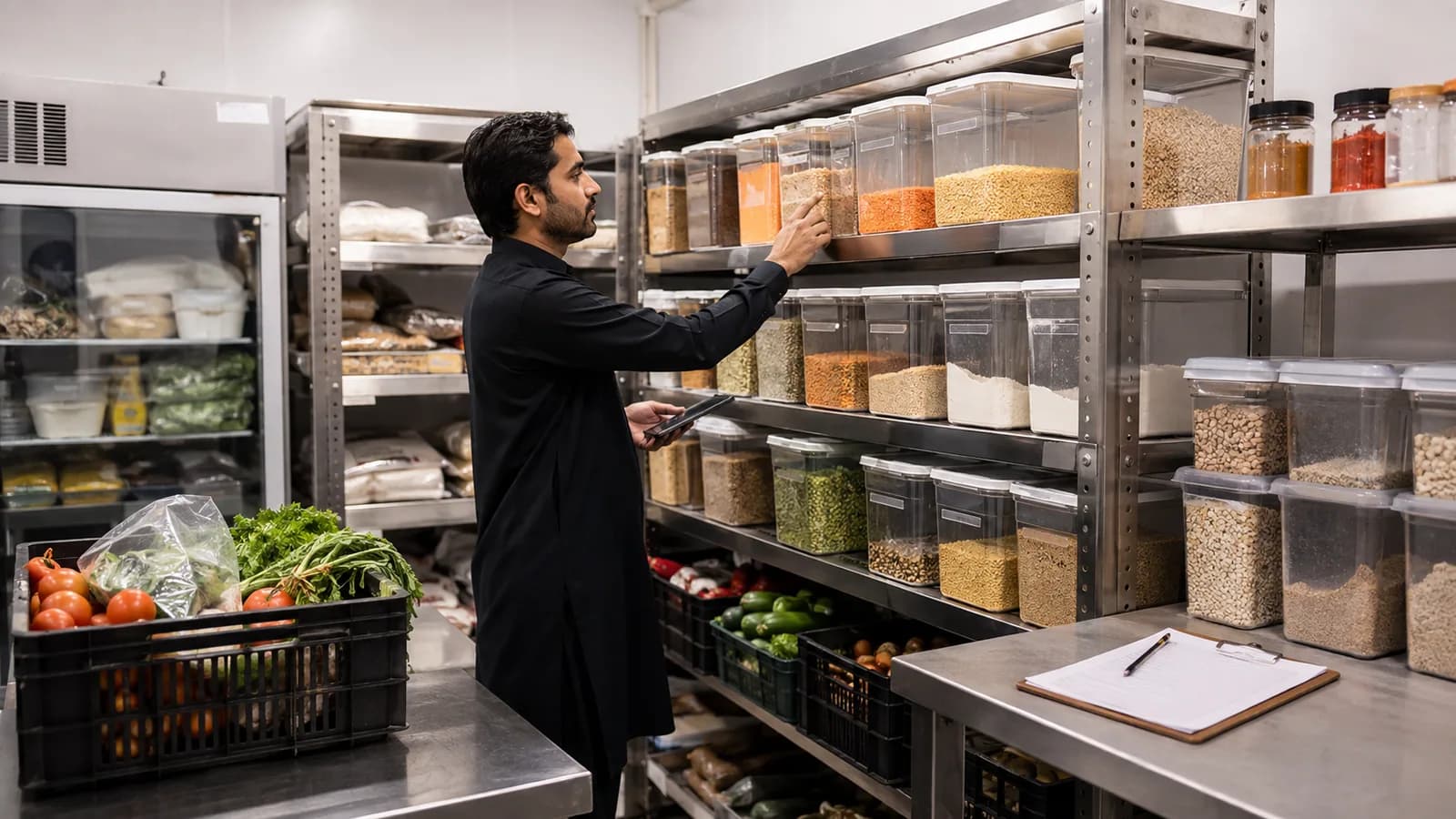
Before placing an order, review what is already available, expected demand, normal usage and the storage life of the ingredient. If previous orders repeatedly created excess stock, that pattern should influence the next purchase.
When deliveries arrive, verify the quantity and condition of what was actually received so inventory records stay accurate.
Better purchasing decisions → less unnecessary excess stock → lower risk of avoidable waste.
Step 4: Store and Rotate Stock Properly
Correct receiving is only useful if stock is stored and rotated properly. Use clear labels, keep storage areas organized and apply a rotation method that suits the ingredient.
FIFO can be useful where older stock should be used before newer stock. For items with expiry dates, FEFO may be more appropriate when a newer delivery expires sooner than an older one.
Step 5: Record Waste, Variances and Reorder Needs
Inventory management should continue after stock is purchased and stored. Record spoiled, expired, damaged or unexpectedly missing stock, and review differences between expected and actual quantities.
The purpose is to identify patterns. If the same ingredient repeatedly expires or shows unusual variance, the next order, storage process or preparation plan may need to change.
What Is FIFO in Restaurant Inventory Management?
FIFO means First In, First Out. It is a stock-rotation method where stock received earlier is used before newer stock when FIFO is appropriate.
For example, if the same non-expiry-sensitive item is received on Monday and again on Thursday, the Monday stock would normally be used first. This keeps older inventory from being forgotten behind newer deliveries.
FIFO vs FEFO: What's the Difference?
FIFO means First In, First Out: stock received first is used first.
FEFO means First Expired, First Out: stock with the earliest expiry date is prioritized first, even if it was received later.
For expiry-dated ingredients, FEFO can be more useful when two batches have different expiry dates. Restaurants should use the rotation method that matches the product and its storage requirements.
How Does Better Inventory Management Reduce Food Waste?
Inventory management cannot remove every source of restaurant food waste, but it can reduce several preventable causes.
Accurate counts show what is already available. Usage tracking helps estimate demand. Better purchasing reduces unnecessary excess stock. Rotation and expiry awareness help time-sensitive ingredients receive attention earlier. Waste records show where problems repeat. Those findings can then improve the next purchasing and production decision.
How Should Restaurants Track Food Waste?
A simple waste record can be useful even before a restaurant uses advanced reporting. For each waste event, record information such as the item, quantity, date and reason. Where useful, also note the storage area or kitchen station.
Common reasons can include expired, spoiled, damaged, over-prepared or unexpected excess stock. The purpose is not simply to total the waste; it is to identify recurring patterns that can influence purchasing, storage and preparation decisions.
Example: From Overstock to Better Inventory Control
Imagine a restaurant repeatedly orders too many chicken fillets.
Before better inventory control, the manager places a similar order every week without checking current stock or recent usage. Some weeks demand is lower, excess stock remains in storage and part of it is eventually discarded.
A better process is:
- Count the chicken stock already on hand.
- Review recent usage and expected demand.
- Purchase closer to the amount likely to be needed.
- Rotate and label existing stock correctly.
- Record any spoiled or unused quantity and adjust the next order if the pattern continues.
The improvement comes from a repeatable cycle: Count → Track → Purchase → Rotate → Review.
How Can Restaurant Inventory Software Help?
As order volume, ingredients, staff or locations increase, keeping inventory records consistent can become harder. Restaurant Inventory Software can centralize stock information and connect inventory activity with restaurant operations.
Useful capabilities can include current stock visibility, item and batch tracking, sales-related stock movement, purchase and return updates, usage reporting, low-stock visibility and variance reporting. The value is not simply collecting more data; it is giving managers clearer information for purchasing and stock decisions.
How DigiNizam Supports Restaurant Inventory Management
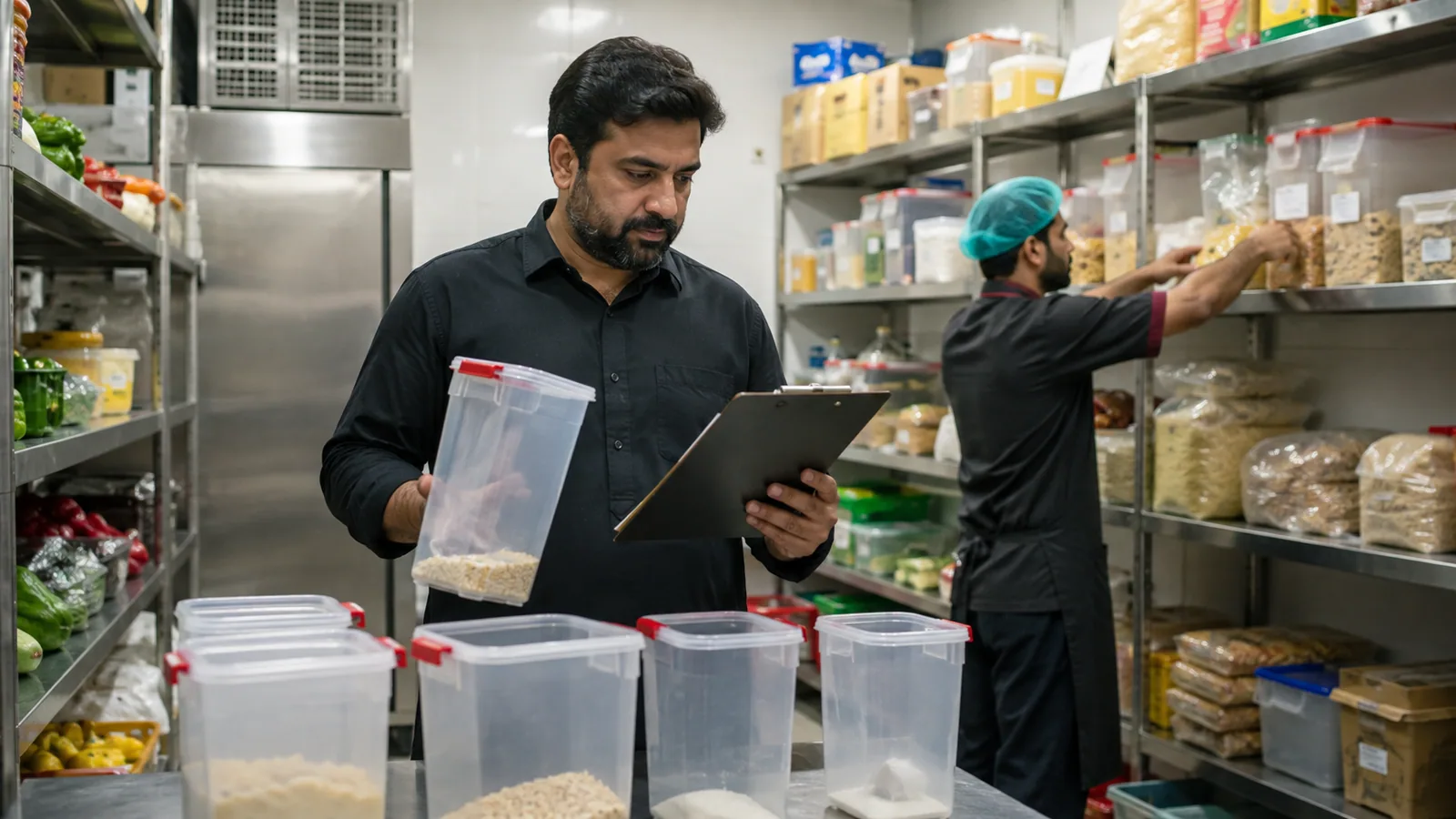
DigiNizam connects restaurant inventory with day-to-day restaurant operations. Its current inventory workflow supports tracking items, batches and locations, with stock updates from sales, purchases and returns. Recipes and kitchen tickets can deduct linked ingredients as restaurant orders move through the system, while stock and movement reports help managers review usage, low stock and variance.
Restaurant inventory can also stay connected with the broader POS and order workflow instead of being managed as a separate spreadsheet process. Review DigiNizam Restaurant Inventory Software and Restaurant Management Software to see how inventory fits the full restaurant workflow. If you are new to POS basics, start with What Is a Restaurant POS System.
Frequently Asked Questions
A practical five-step process is to count and organize stock, track usage and demand, plan purchasing and receiving, store and rotate stock properly, and record waste, variances and reorder needs. This is a practical restaurant framework rather than a universal industry standard.
FIFO means First In, First Out. It means stock received earlier is used before newer stock when that rotation method is appropriate. For expiry-dated items, FEFO may be more suitable when a later delivery expires sooner.
Restaurants can reduce preventable inventory-related food waste by improving stock counts, purchasing closer to demand, organizing storage, using an appropriate stock-rotation method and recording waste so repeated problems can be identified and corrected.
Take Better Control of Your Restaurant Inventory
Better inventory management starts with knowing what you have, how quickly it is being used and where unnecessary waste is occurring. See how DigiNizam connects restaurant inventory with POS sales, kitchen operations and reporting by booking a DigiNizam demo.
Book a DigiNizam Demo